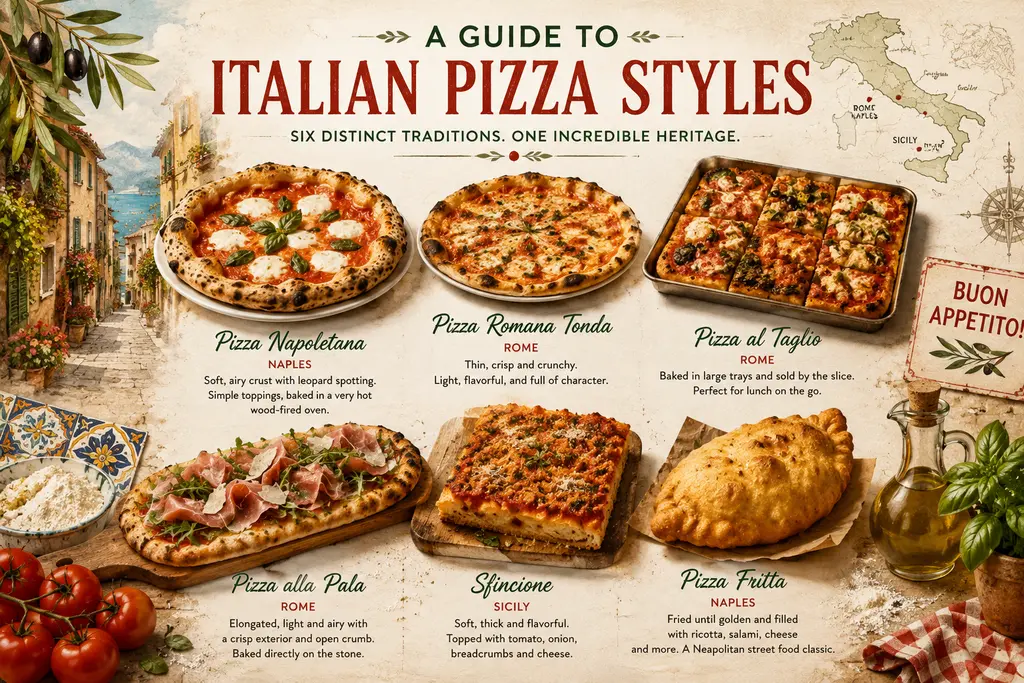
A Guide to Italian Pizza Styles
Italian pizza is far more diverse than a single round pie. From the soft, blistered crusts of Naples to crisp Roman pizza, Sicilian sfincione, and fried street food, each style reflects its own regional traditions and techniques.
Italian pizza styles at a glance
To many outside of Italy, “Italian pizza” suggests a single, definitive archetype: a thin-crust circle topped with tomato and mozzarella. In reality, Italy’s pizza culture is a diverse landscape of textures, temperatures, and traditions. There is no singular “authentic” style because pizza evolved as a hyper-local response to regional ingredients, available fuels, and social needs. In Naples, pizza was a rapid, high-heat street food; in Rome, it branched into both a cracker-thin restaurant staple and a high-hydration bakery product; in Sicily, it took the form of a thick, spongey bread rooted in festive home cooking.
These variations are driven by technical differences in dough preparation and baking. The choice between a wood-fired oven and an electric deck oven, for instance, dictates whether a crust will be soft and charred or rigid and golden. Similarly, the hydration level—the ratio of water to flour—determines whether a dough becomes an airy, honeycomb-like structure or a dense, satisfying crumb. Understanding these styles requires looking past the toppings and focusing on the craftsmanship of the base and the regional heritage that defines how each slice is served and consumed.
| Pizza style | Origin | Shape | Crust and texture | Cooking method | Typically served |
|---|---|---|---|---|---|
| Napoletana | Naples | Round | Soft, elastic, charred rim | Wood-fired oven (90s) | Whole, seated |
| Romana Tonda | Rome | Round | Ultra-thin, crisp, brittle | Low-temp deck/wood oven | Whole, seated |
| Al Taglio | Rome | Rectangular | Airy, light, crunchy base | Electric tray oven | By the slice (cut) |
| Alla Pala | Rome | Elongated | Crunchy exterior, soft heart | Directly on oven stone | By weight or shared |
| Sfincione | Palermo | Rectangular | Thick, soft, spongey | Bread oven/Sheet pan | Street food or snack |
| Pizza Fritta | Naples | Folded/Round | Puffy, golden, tender | Deep-fried in oil | Street food (handheld) |
Pizza Napoletana
Pizza Napoletana is the progenitor of modern pizza, a style so culturally significant that its craft is recognized by UNESCO. Originating in Naples, it was historically a food for the city’s working poor—fast, affordable, and designed to be eaten hot. Today, it is governed by strict regulations (the AVPN or STG) that dictate everything from the flour type to the diameter of the finished product.
The dough is the soul of the Neapolitan style. It is made using only four ingredients: highly refined “00” flour, water, sea salt, and yeast. Unlike many other styles, no fats like olive oil or lard are permitted. Fermentation usually lasts between 8 and 24 hours at room temperature, developing a delicate flavor without becoming overly acidic. The shaping is done entirely by hand, using a “slap” technique (lo schiaffo) that pushes air from the center to the edges, creating the cornicione—the characteristic raised, puffy rim.
The texture of a true Napoletana is often a surprise to those accustomed to Western “crispy” pizza. It is soft, supple, and elastic. The high heat of a wood-fired oven (reaching 450°C to 500°C) flash-cooks the pizza in 60 to 90 seconds. This creates “leopard spotting”—bitter, charred blisters on the rim—while leaving the center moist and slightly floppy. Because of this high moisture content and soft center, it is traditionally served whole on a plate and eaten with a knife and fork, or folded into a “wallet” (a portafoglio) for eating on the move.
The most iconic variations are the Margherita (tomato, mozzarella, basil, and extra virgin olive oil) and the Marinara (tomato, garlic, oregano, and oil). The Marinara, despite the name, contains no seafood; it was historically the choice of fishermen returning to port. In Naples, these toppings are applied sparingly to ensure the dough remains the protagonist. The result is a perfect balance of acidity from the San Marzano tomatoes and the creamy richness of fior di latte or mozzarella di bufala.
Pizza Romana Tonda
If Neapolitan pizza is defined by its softness, Pizza Romana Tonda is defined by its “snap.” Often referred to as scrocchiarella (from the Romanesco word for “crunchy”), this style is the antithesis of the chewy Neapolitan pie. It emerged in the mid-20th century in Rome’s pizzerias and remains the standard for a sit-down pizza dinner in the capital.
The primary distinction lies in the dough’s composition and the shaping process. Roman dough often includes a small amount of olive oil, which helps the crust achieve a dry, cracker-like brittleness. While Neapolitan pizzaioli would never use a rolling pin (mattarello), many Roman practitioners use one to ensure the dough is evenly thin from the center to the very edge. This eliminates the puffy cornicione, resulting in a flat, edge-to-edge crust that supports toppings without drooping.
The baking process is also slower and cooler than in Naples. While a Neapolitan pizza is in and out of the oven in a minute, a Romana Tonda stays in for three to four minutes at a lower temperature (around 300°C to 350°C). This extended time allows the moisture to evaporate almost entirely, ensuring the structural integrity and characteristic crunch. The result is a pizza that stays rigid when lifted, making it a favorite for those who dislike the “wet” center of a Neapolitan pie.
Toppings on a Romana Tonda are often more adventurous and varied than in Naples. Because the crust is so stable, it can support heavier ingredients like capricciosa (artichokes, ham, mushrooms, olives, and egg) or traditional Roman flavors like fiori di zucca (zucchini flowers) and anchovies. It is almost exclusively served in the evening in pizzerias, meant to be shared over beer or wine in a lively, social atmosphere.
Pizza al Taglio
Pizza al Taglio (literally “by the cut”) is Rome’s quintessential street food. Born out of the city’s bakeries, it solved the problem of providing a quick, high-quality meal for workers and students on the go. Unlike the round pizzas served in restaurants, al taglio is baked in long, rectangular metal trays (teglie) and sold by weight.
The dough for al taglio is a technical marvel. It typically features a high hydration level—often 80% water or more—and undergoes a long, cold fermentation in the refrigerator for 48 to 72 hours. This process creates a dough that is incredibly light and riddled with large air pockets (alveoli). When baked in an electric deck oven, the bottom of the pizza fries slightly against the oiled blue-steel tray, creating a golden, crunchy base that contrasts with the cloud-like interior.
One of the most striking aspects of al taglio is the visual display. In a Roman pizzeria al taglio, dozens of colorful trays are lined up behind glass. Customers point to the piece they want, and the server uses scissors or a knife to cut a rectangle to the desired size. It is then weighed and re-warmed if necessary. This format allows diners to sample multiple flavors in one sitting, from the simple pizza bianca (brushed with oil and salt) to elaborate gourmet toppings like porchetta, potato and rosemary, or fresh burrata added after the bake.
The modern evolution of this style, often called pizza in teglia alla romana, has seen it move from humble snack food to a gourmet art form. Leading bakers focus on heritage grains and seasonal produce, but the core appeal remains: a thick, structural base that manages to feel lighter than almost any other bread-based pizza style. It is the ultimate everyday Roman luxury.
Pizza alla Pala
Pizza alla Pala shares its Roman ancestry with al taglio but is distinguished by its presentation and baking method. The name comes from the pala, the long wooden or metal peel used to slide the pizza into the oven. Unlike al taglio, which is confined by the walls of a tray, pizza alla pala is stretched into a long, oval shape and baked directly on the stone floor of the oven.
The dough is similar to the high-hydration, long-fermentation dough used for tray pizza, but it requires even more skill to handle. Because it is baked without a pan, the baker must carefully stretch the wet, delicate dough onto the peel without deflating the air bubbles. This direct contact with the oven stone produces a different texture: the bottom is more “toasted” and rustic than the “fried” finish of tray pizza, while the interior remains exceptionally soft and airy.
A typical pizza alla pala can be up to a meter long. It is usually served on a wooden board, often intended for sharing between several people. This makes it a popular choice for informal lunches or “aperitivo” hours in Roman bakeries and contemporary craft pizzerias. Because it is quite thick—often 2 to 3 centimeters—it is frequently sliced horizontally and stuffed like a sandwich, a preparation known as pizza ripiena.
The toppings for alla pala are usually added in two stages. Some, like tomato sauce or mozzarella, are baked with the dough. Others, particularly delicate cured meats like Mortadella or fresh greens like arugula, are added once the pizza is removed from the heat. This preserves the integrity of the fresh ingredients against the warm, crunchy bread. It represents a middle ground between the portability of street food and the shared experience of a restaurant meal.
Sfincione
Traveling south to Sicily, the pizza tradition changes dramatically. Sfincione is the soul of Palermo’s street food scene, a style that feels more like a savory cake or a rich focaccia than a standard pizza. The name is derived from the Latin spongia or the Arabic isfang, both meaning “sponge,” which perfectly describes its thick, porous texture.
The base of a Sfincione is a soft, leavened dough made with a mix of flour and often a bit of semolina, which gives it a slight golden hue and a sturdy crumb. It is allowed to rise significantly in a deep, oiled tray before being topped. Unlike mainland styles, Sfincione rarely features fresh mozzarella. Instead, it reflects Sicily’s history and local larder, utilizing strong, pungent flavors that can stand up to the thick bread.
The traditional topping is a rich, slow-cooked sauce made from onions, tomatoes, and plenty of anchovies, which melt into the sauce to provide a deep umami base. This is topped with cubes of Caciocavallo cheese (a sharp, sheep or cow’s milk cheese) and a generous layer of toasted breadcrumbs mixed with oregano. The breadcrumbs are crucial; they soak up the olive oil and tomato juices, creating a crunchy, savory crust on top of the soft bread.
In Palermo, Sfincione is sold from three-wheeled motorino carts (lapa) or in neighborhood bakeries. It is usually served at room temperature, making it a perfect snack for the Mediterranean heat. While the classic red Sfincione is the most famous, there is also a “white” version from Bagheria, topped with ricotta, tuma cheese, onions, and anchovies. It is a rustic, heavy style that prioritizes the comfort of thick, seasoned bread over the minimalism of the Neapolitan tradition.
Pizza Fritta
Pizza Fritta (fried pizza) is a testament to Neapolitan ingenuity during times of crisis. After World War II, many wood-fired ovens in Naples were destroyed, and ingredients like mozzarella and tomatoes were expensive and scarce. Frying the dough was a practical alternative; it didn’t require a specialized oven and allowed the use of cheaper, more stable fillings like ricotta and pork fat (cicoli). Often sold by women from the doorways of their homes (the “pizza a otto,” where you ate today and paid eight days later), it became a staple of Neapolitan street life.
The dough is essentially the same as that used for a baked Pizza Napoletana, but the cooking method transforms it entirely. A portion of dough is stretched, filled with ingredients, and then covered with another layer of dough or folded over into a half-moon shape (a calzone). It is then lowered into a vat of hot oil. As it fries, the dough puffs up like a golden balloon, creating a light, airy shell that is remarkably non-greasy when executed correctly.
The classic filling is a mixture of creamy ricotta, smoked provola cheese, cicoli (pressed pork scraps), black pepper, and sometimes a small amount of tomato sauce. The steam trapped inside the dough during frying melts the cheese and warms the ricotta into a rich, molten core. The texture of the exterior is slightly crisp but mostly tender and chewy, with a unique savory flavor that only frying can provide.
Today, Pizza Fritta has moved from a “poverty food” to a celebrated specialty. It is still served as a classic street food, wrapped in brown paper to soak up any stray oil, but it is also found in high-end pizzerias. It offers a completely different sensory experience than baked pizza—the contrast between the hot, puffy exterior and the rich, creamy interior makes it one of Italy’s most indulgent regional traditions.
How Italian pizza styles compare
The diversity of Italian pizza can be understood through a few key technical and cultural pivots. The most fundamental is the relationship between hydration and temperature. Styles with high hydration (Al Taglio, Alla Pala) require lower temperatures and longer baking times to structuralize the moisture and create a crisp shell. Conversely, low-to-mid hydration styles (Napoletana) thrive on intense, rapid heat that leaves the dough soft and “alive.”
Another major divide is structure. On one side, you have the “whole pizza” tradition (Napoletana, Romana Tonda), which is designed for immediate consumption, usually in a seated setting. These are thin and rely on a balance of fresh toppings. On the other side is the “bakery” tradition (Al Taglio, Sfincione, Alla Pala), which utilizes thicker, more robust doughs that can support a wider variety of toppings and remain delicious even when reheated or served at room temperature.
| Feature | Napoletana | Romana Tonda | Al Taglio | Alla Pala | Sfincione | Pizza Fritta |
|---|---|---|---|---|---|---|
| Texture | Soft & Floppy | Crisp & Thin | Airy & Crunchy | Light & Toasted | Soft & Spongey | Puffy & Golden |
| Hydration | ~60-65% | ~55-60% | 80%+ | 75-80% | Moderate | ~60-65% |
| Cooking | Wood (90s) | Deck/Wood (3-4m) | Electric Tray | Oven Stone | Sheet Pan | Deep Fried |
| Eat with | Knife & Fork | Hands/Knife | Hands | Hands/Shared | Hands | Hands |
| Portability | Low | Low | High | Medium | High | High |
Which Italian pizza style should you try?
Choosing a pizza style depends entirely on your textural preferences and the context of your meal.
- For the purist: If you want the historic “ground zero” of pizza, Pizza Napoletana is essential. It is the best choice for those who value the quality of the dough and the freshness of simple ingredients like buffalo mozzarella and San Marzano tomatoes.
- For the crunch-seeker: If you find Neapolitan pizza too “wet” or soft, seek out Pizza Romana Tonda. Its cracker-like base and rigid structure provide a satisfying snap that many find more familiar and approachable.
- For the curious explorer: Pizza al Taglio is the best way to sample the breadth of Italian ingredients. Because it is sold by weight, you can try four or five different topping combinations in a single lunch, making it a dream for those who want to explore flavors beyond tomato and cheese.
- For a substantial meal: If you prefer something breadier and more filling, Sfincione or Pizza alla Pala offer a more substantial, focaccia-like experience. These styles are perfect for those who enjoy the interaction between a thick, absorbent crust and rich, savory toppings like onions and anchovies.
- For the ultimate street food experience: Pizza Fritta is a must-try. It is a heavy, indulgent, and deeply traditional Neapolitan experience that offers a completely different perspective on what pizza dough can become when exposed to heat.
Italy’s pizza styles are a map of its history and geography. From the wood-fired ovens of the south to the electric deck ovens of the capital, each style reflects a specific way of life and a local definition of what makes a perfect meal. Whether thin and brittle or thick and spongey, these traditions continue to evolve, proving that pizza is not a static recipe, but a living craft.
You may also enjoy
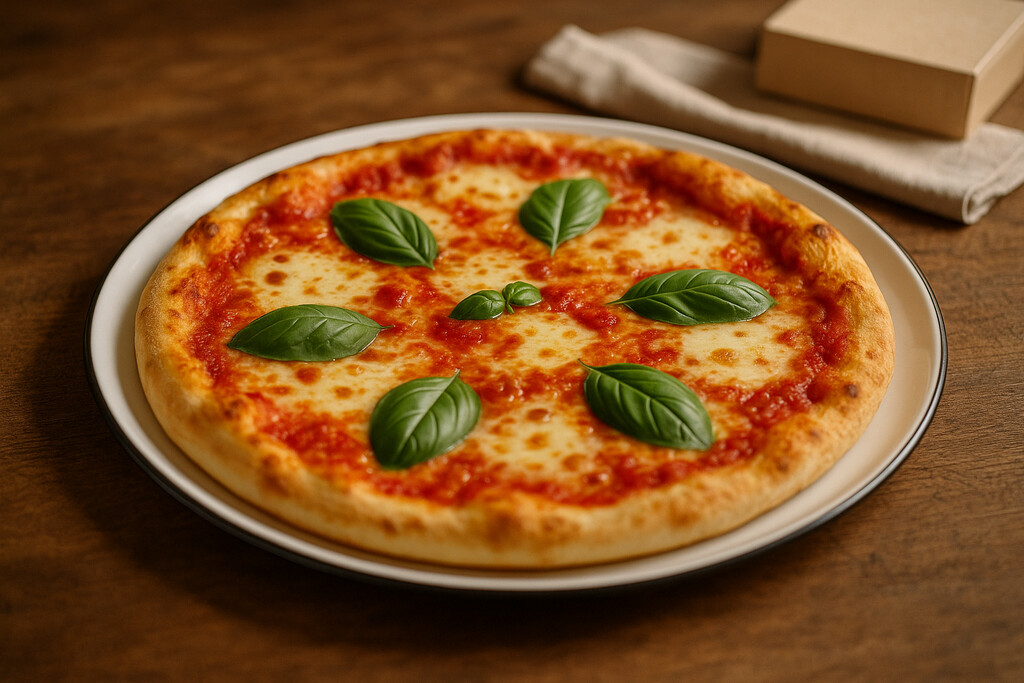
Pizza Express Margherita
 37 min

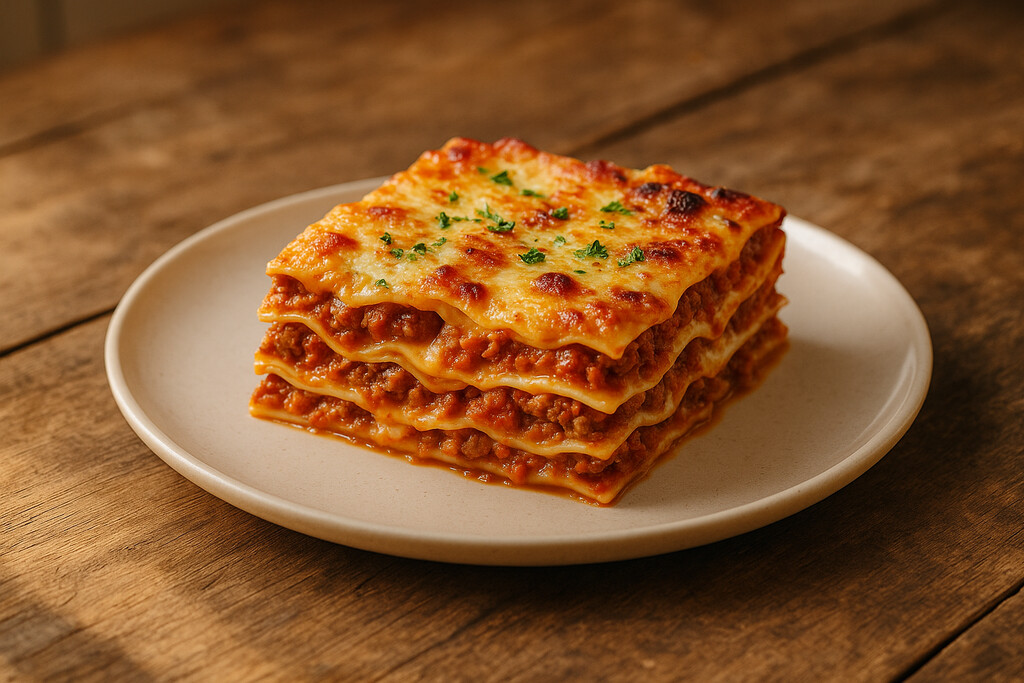
Lasagne
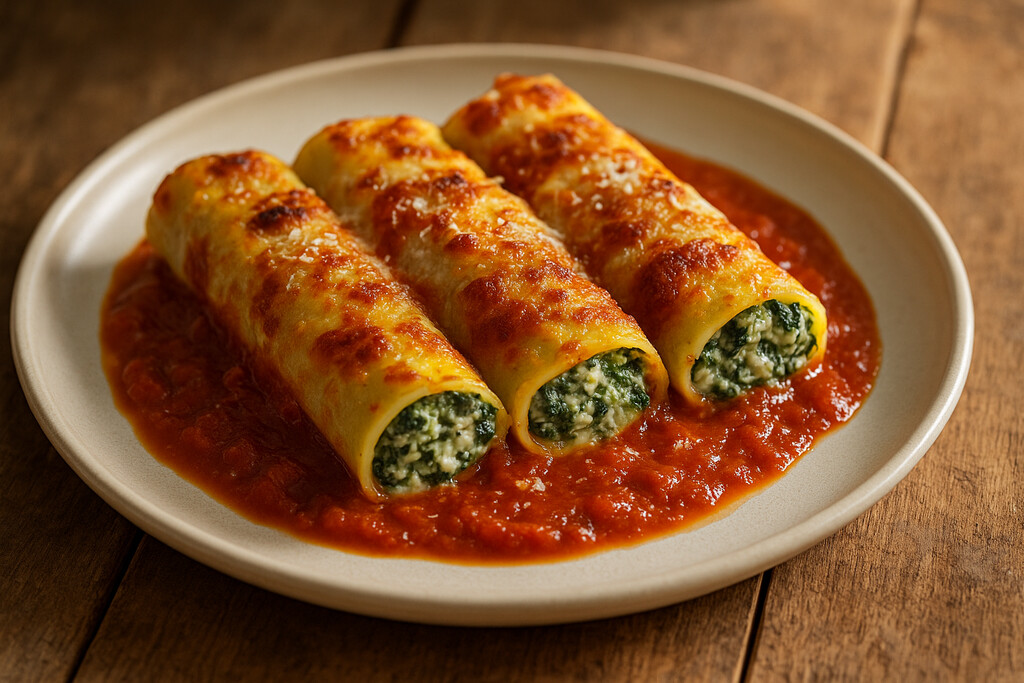
Spinach & Ricotta Cannelloni
Tomato Cheese Tart
Mediterranean Pasta Salad

Ribollita
Osso Buco alla Milanese
Budino Di Ricotta